

| Shopper Insights
Mapping the Customer Journey: 5 Considerations When Creating a Map

A customer journey map provides an easy way to understand and visualize a customer’s experiences across all touchpoints.
When aggregated, customer journey maps reveal patterns of shopping, purchase, and usage behaviors that can become the foundations of new strategies and new marketing initiatives.
Customer journey maps help companies understand the evolving needs and preferences of the target audience, identify pain points and pinpoint new opportunities, and showcase how, when, and why customers make decisions.
Example Customer Journey Map
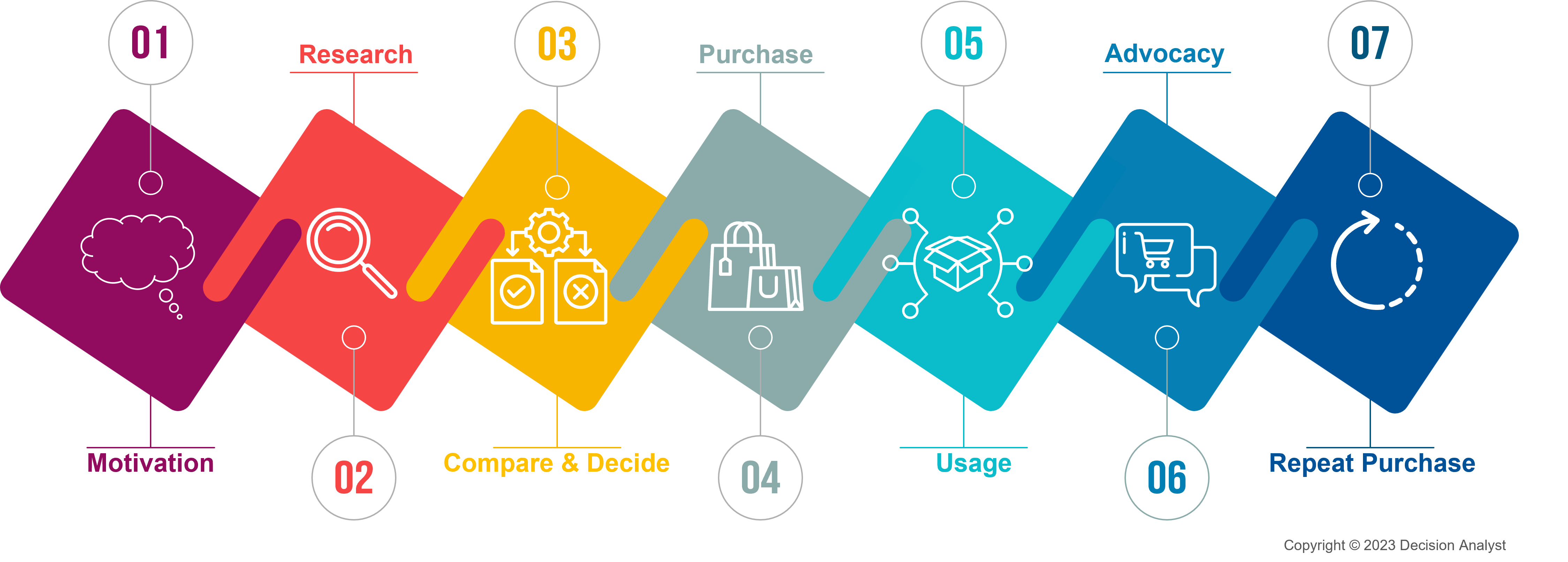
Sometimes retailers or brands want to map the Customer Journey for each of their segments or key groups of customers. The journey is typically nuanced and segmented in some way, but includes the following:
1. Mapping Touchpoints:
This is a crucial process where every interaction point between the customer and the brand is identified. These "touchpoints" might include:
- Online: Website visits, social media interactions, customer service help centers, emails, ads, app usage, reviews.
- Physical & Personal: Store visits, phone calls to customer service, physical mail, word-of-mouth recommendations.
2. Mapping The Journey
Along the journey, many steps happen—each one playing an important role toward creating a satisfied, high-value customer.
3. Analyzing Emotions and Pain Points
At each touchpoint, it is critical to analyze and report on the emotions. This includes identifying moments of frustration, confusion, delight, or satisfaction. These are often referred to as "moments of truth."
4. Gathering Data
- Awareness: The shopper first becomes aware of a need or a potential solution.
- Consideration: The shopper researches options and compares different brands/products.
- Purchase/Decision: The shopper makes a buying decision.
- Retention/Usage: The customer uses the product/service and potentially interacts with customer support.
- Loyalty/Advocacy: The customer becomes a repeat buyer and may recommend the brand to others (or the opposite and warn others not to buy the brand).
- Research uses both qualitative and quantitative data:
- Qualitative: Customer interviews, focus groups, feedback surveys, social media monitoring, recorded call center conversations, employee insights.
- Quantitative: Website analytics (traffic, page paths, conversion rates), purchase data, customer demographics, email engagement metrics.
5. Visualizing the Journey (Customer Journey Map)
The culmination of the research is often a "customer journey map," a visual representation (like the diagram or infographic above) that illustrates the customer's steps, actions, emotions, and pain points at each stage and touchpoint.
Download Our Free Shopper Insights Template
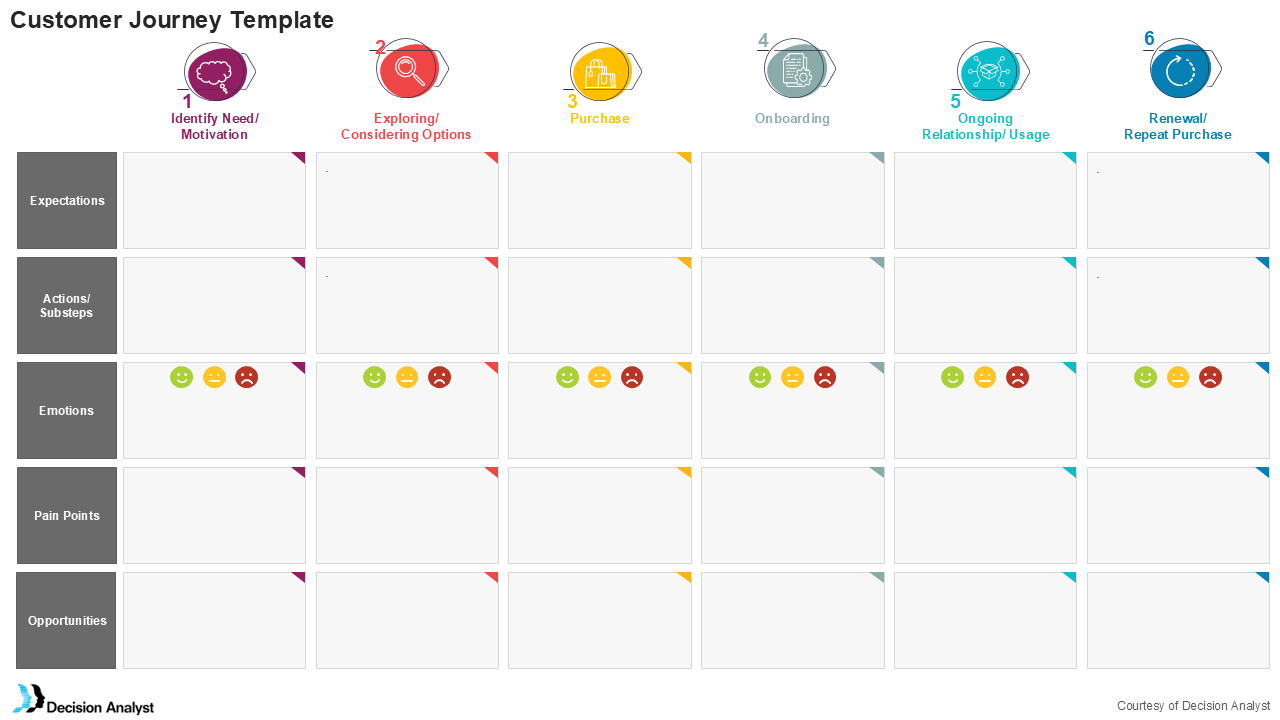
Decision Analyst has created a free Customer Journey Map Template to aid you in your Customer Journey Mapping:
Shopper Insights Team


Gretchen Riskind
Qualitative Consultant

Heather Hardiman
Qualitative Consultant
We Are Here To Help
Decision Analyst is a leading global marketing research and analytical consulting firm with over 45 years of experience in Shopper Insights and Customer Experience Optimization. Our staff has helped hundreds of companies improve the shopping experience and the customer experience.
Shopper Insights is one variable in a complex set of variables that impact a brand. These variables include branding, positioning, merchandising, product, packaging, pricing, advertising and promotion
Newsletter
Signup to receive our Create Winning Strategies Newsletter!